

Forum Replies Created
-
AuthorPosts
-
typhoontye
ParticipantHello Ryan,
I’ve hauled my boat once. No problems. The only caution I am aware of is to NOT block under the hollow part of the keel. We installed a support under the forward end of the keel and had no troubles. I don’t know about a support under the aft end of the keel. We did not do that and had no problems. Knowing what little I know, I don’t think I would put anything under the aft end of the keel. Don’t think it is necessary, and may be detrimental. Other than that, block is like any other vessel.
David
Blue Moon, #189ParticipantKind of a special deal, Ewan. Local Westerbeke dealer has had one in his warehouse for the past year…recently rebuilt. I painted his Fuji 45, and am getting the engine as payment. A one-off deal. He has plenty of business and doesn’t desire to take on any new enterprises.
David
ParticipantMy Westerbeke book says 50 PSI at some rpm (can’t remember, but around 2000). Mine hits that, but just. Builds pressure relatively quickly on start up and buzzer quits. I have around 6000 hours on the engine.
I think you are on the right track on the cause of your problem. Basically a worn pump and/or worn main/rod bearings. As a diagnostic, perhaps put in a quart of STP to raise the viscosity. I don’t recommend running that indefinitely, but if your symptoms go away then it points to the pump or the bearings.
I assume you eliminated indication problems. Certainly a direct reading pressure gage should be tried if it hasn’t been. But since you are getting the buzzer and the low pressure readings, I suspect it isn’t indication problems since two separate transmitters are used. I assume too that you have changed the oil filter already.
I am hoping to pull my W58 tomorrow, weather permitting. I have a rebuilt W58 available to install, and my current engine is being turned in as a core. Only trouble with mine is the oil leaks and sort of high hours, though it runs fine; except for the fact it runs a bit warm in the Summer. Anyway, hoping all goes well with my swap, and I hope you find a solution to the oil pressure issues.
David
Blue MoonParticipantMy sump always has water in it. I’ve heard of others claiming ‘dusty bilges’ but I am not so fortunate. Leaks from rainwater will find it’s way to the bilges (from the cockpit, typically, or legit bilge air vents, or the anchor locker area) and are not of too much concern to me as long as no interior damage is occurring. And if you have air conditioning, it is likely that condensation from the evaporators is routed to your bilge. However, it is good to monitor what’s going on the bilge. Could be salt water leaks (not good…just had one myself).
David
Blue MoonParticipantHello Paul,
It is common practice on our boats to only block the forward end of the keel, under the actual lead. Reported experience is that blocking under the bilge area is a no no. This area is too weak to take the weight of the boat and will very likely break if the full weight of the vessel is upon it. I have pulled my boat once, and supported it at the very forward end of the keel only and everything was just fine.
David
Blue Moon, #189ParticipantThanks Charlie. I am aware of the system but for some reason did not consider it. I will look into it now…could be the ticket.
David
ParticipantThanks Phil. Your approach sounds like the logical way to go since you wanted to preserve the floor. Since I didn’t, I could cut holes to gain access for more vertical supports in the area adjacent the settees. So far so good, but currently awaiting the holding tank, ordered today. It will be 35 gallons, much better than the current twenty. I will keep the group updated.
David
ParticipantI doubt this is helpful, but only way I can figure for what is happening is if the HW heater is receiving power through an inverter. I wired mine this way so I could make HW using battery power (works well, just have to monitor battery power closely). Guessing you probably know the system well enough to know this isn’t the case, just thought I would throw that out. It might be conceivable if the HW were wired this way any you were plugged into shore power you would never notice
ParticipantFirst an administrative note: I tried to respond to Patrick’s thread via e-mail, but it did not come back to me, so I assume it did not make it out. This has happened before so it appears that if you want to comment or respond to a thread you may need to visit the website to do so.
Patrick, you may not like this approach, but since I am also replacing the flooring surface, I can cut holes in the floor as required. I cut rectangular holes near the settees, adjacent to the mast. Then I used furniture clamps to ‘pull up’ the floor where it had sagged. My floor had sagged to the point where I had a three quarter inch gap between the floor surface and the bottom of the vertical surface of the port and starboard settees. So by cutting the holes, I could get under the floor with one end of a furniture clamp and place the other end of the furniture clamp on the horizontal surface, seating surface, of the settees. It pulled up the floor very nicely and the gap is gone. Then I glassed in vertical lumber supports from the bottom surface of the sole to the hull surface to hold the floor in the proper position. The middle of the floor, nearer the mast, had also sagged, so I placed a solid piece of lumber, four feet long, longitudinally along the floor in the area of the sag, as a temporary brace. Of course there was a gap between the lumber and the floor surface in the area of the sag, so I used furniture clamps to draw the floor up to the solid lumber, making it level with the surrounding good floor. After installing my supports to hold the floor in the correct position, I removed the clamps and the solid piece of lumber. The floor is flat and solid now, albeit with two new holes, easily repaired. The new quarter inch teak and holly plywood will cover all the repair areas.
Unrelated, I also removed my holding tank today through a much larger hole cut into the cabin sole. I am having a custom tank built with sides that flare out to give it greater capacity than the old one. I should go from 20 gallons to 35 or so. Building a mock up tomorrow to be sure that what I designed will fit.
Hope this is helpful
David
ParticipantThanks Paul, appreciate all you’ve done. Any surprises on costs? Last I remember you were quoted 875 plus shipping and sales tax. Is this the right number?
David
ParticipantHello Paul,
Just got back stateside and have more reliable e-mail, though we are still traveling on Blue Moon for another 5 weeks or so. Anyway, my last name is Tye and I still want two each mast pulpits. If I understand your instructions I should hold off calling Dave/Railmakers until I hear from you? Many thanks for handling this!
David
Attachments:
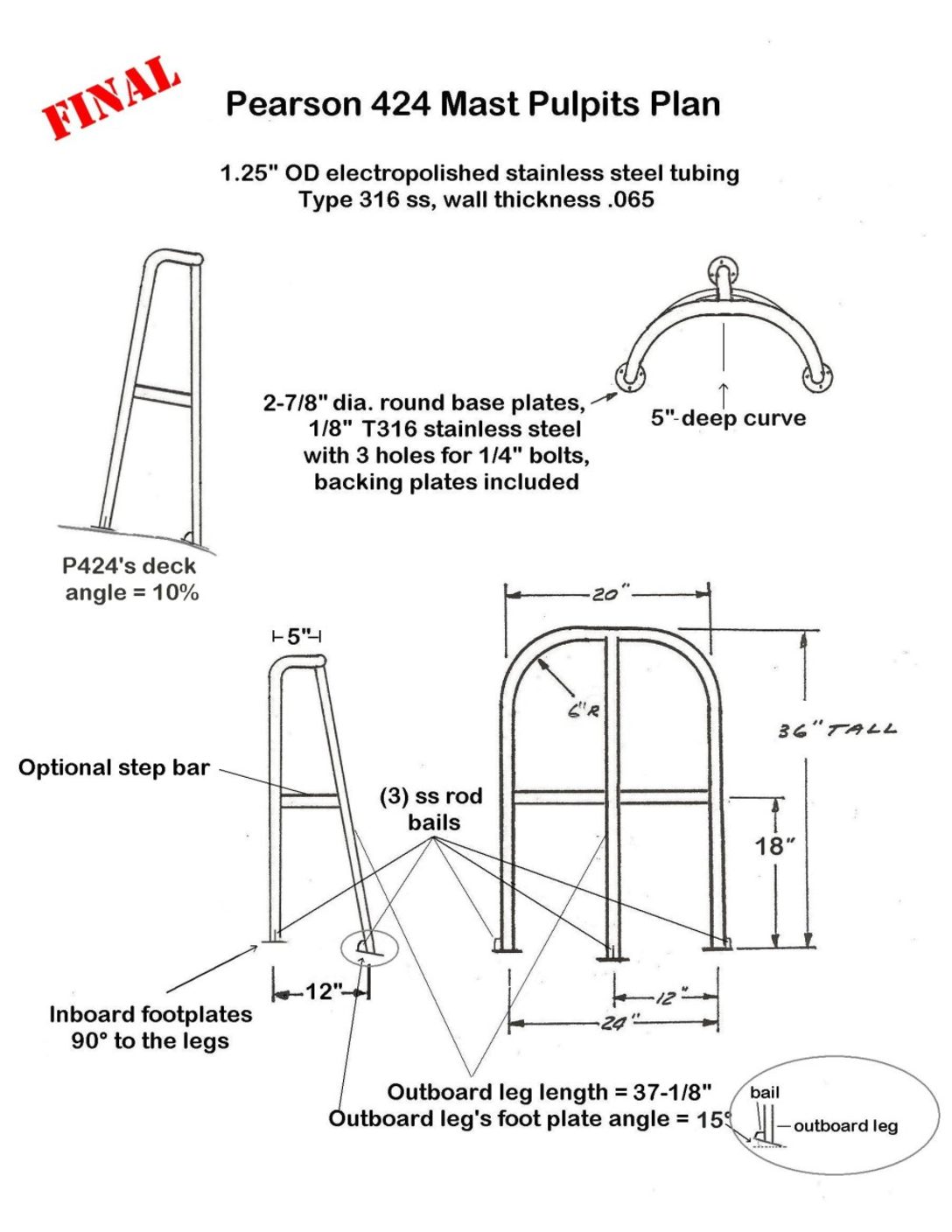
270022213471606696.pdf

4799812803392710856.jpg
ParticipantHarken MK IV 2. No complaints but occasionally get some overrides on the drum if I get sloppy when the furling line runs out. Unit came with the boat and appears to work as well as any other Iâve had, and Iâve had Hood and ProFurl.
David
Attachments:
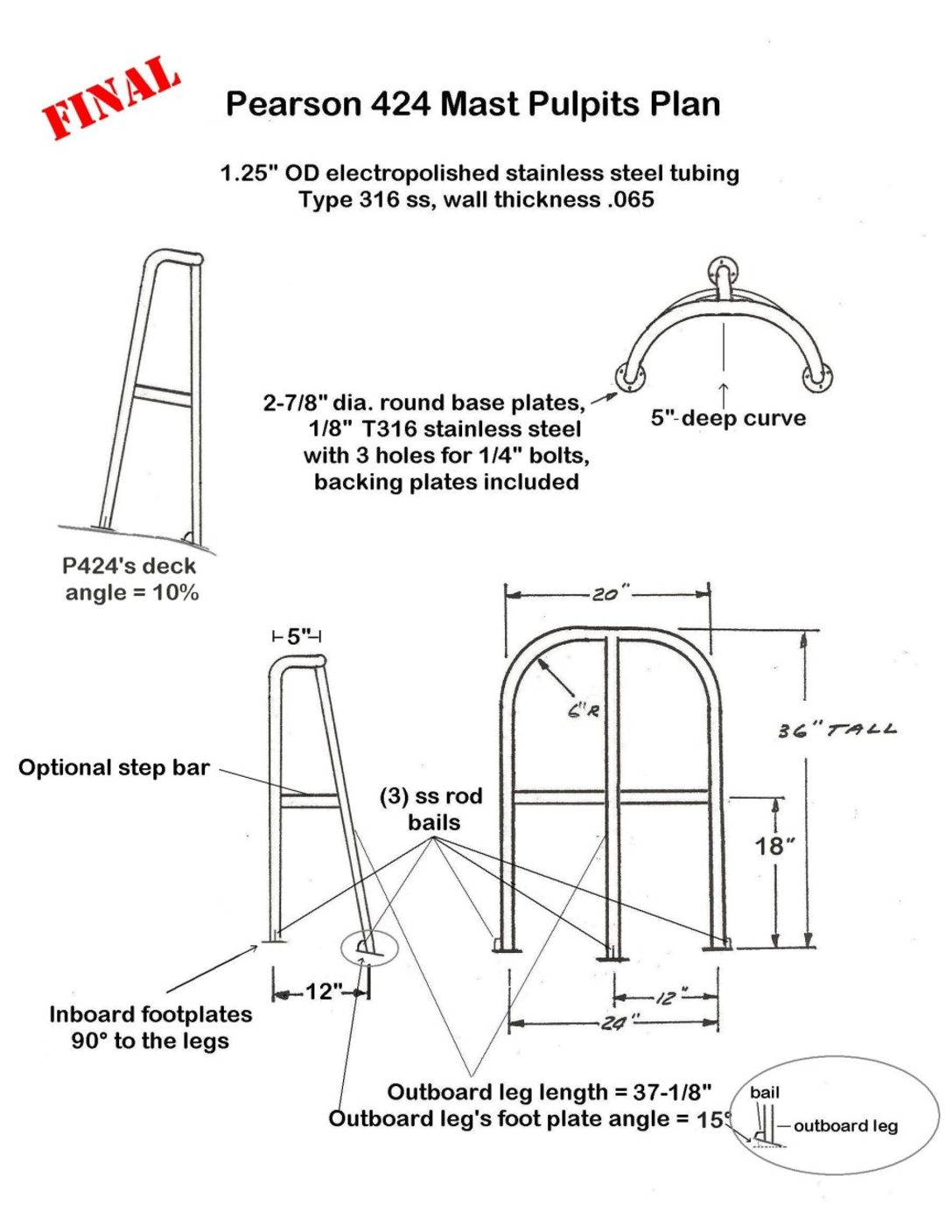
270022213471606696.pdf
4799812803392710856.jpg
ParticipantI talked to a salesman at a boat show a few years back about the external units. They look to be of pretty good quality and I havenât heard anything bad about them. Of course you can expect a reduction in sailing performance on the order of half a knot I am told, but I donât think it should be that much based on what I saw. I believe the fellow told me that one had been installed on a 424 and the owner disagreed with the maker of the unit regarding itâs installation. Specifically the angle at which the unit was mounted. He reportedly felt a more âstreamlinedâ arrangement would work better and had an angled shim of some sort installed. The company disagreed but did it anyway. Thatâs all I know. Perhaps the individual who had this unit installed will read this and enlighten us further. I too am intrigued by the idea but that will have to wait, probably indefinitely.
David
#189, Blue Moon
Attachments:

270022213471606696.pdf
4799812803392710856.jpg
ParticipantSounds good. Any updates very much appreciated.
David
Attachments:

270022213471606696.pdf
4799812803392710856.jpg
ParticipantThanks for the observation, Rick. Any others appreciatedâ¦
David
Attachments:
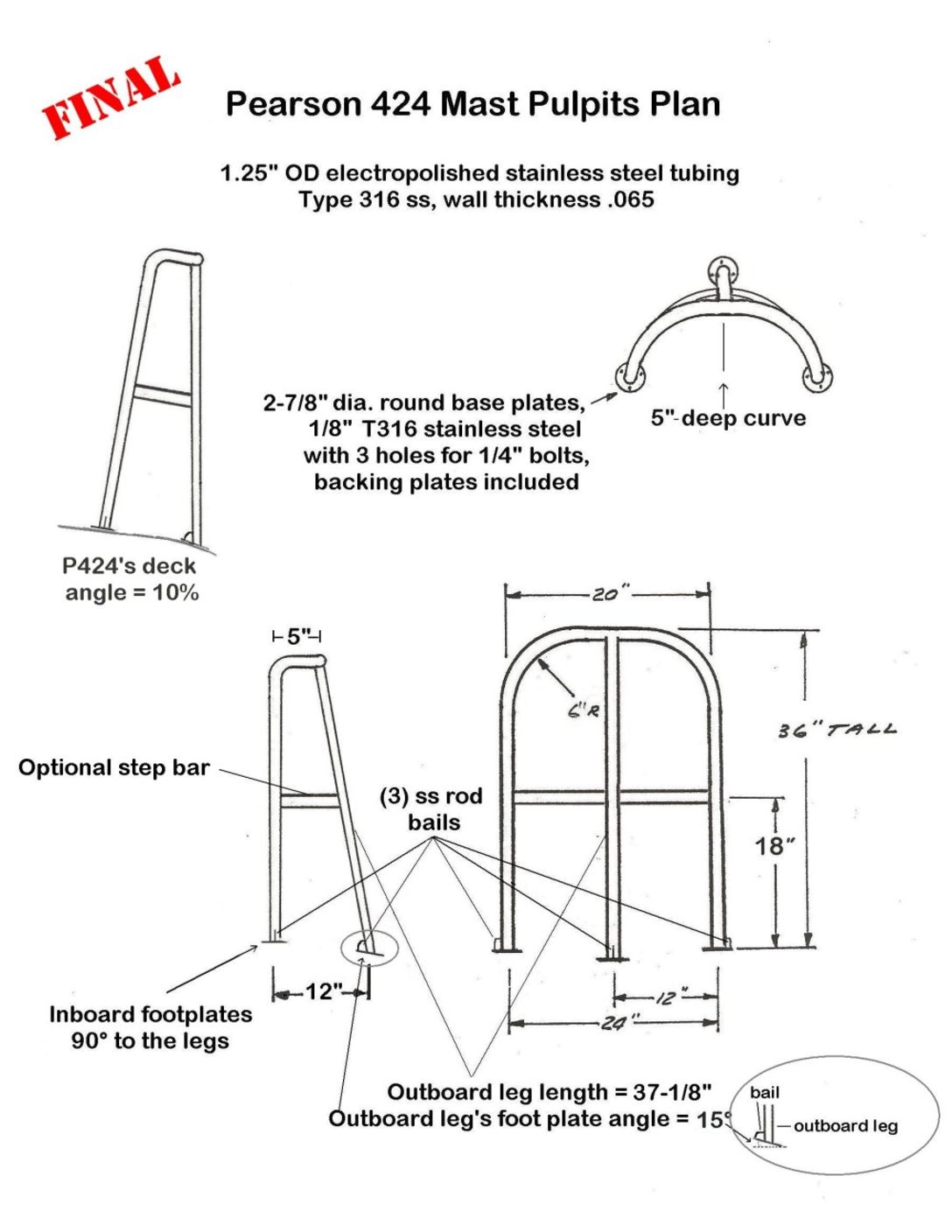
270022213471606696.pdf
4799812803392710856.jpg
-
AuthorPosts
